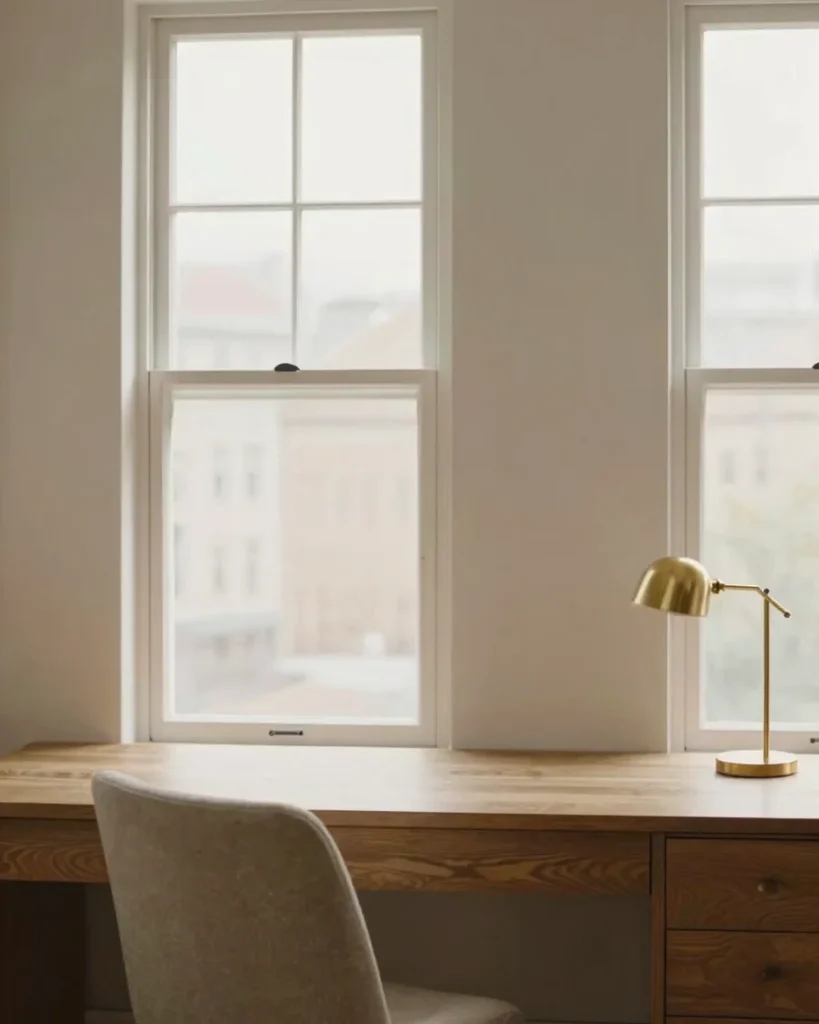
Residential office furniture should work hard without looking like it came from a corporate floor. Start with the criteria that matter: a stable surface at the right height, seating that supports long hours, and finishes that sit comfortably beside the rest of the room.
Each guide weighs function against warmth so you can choose with confidence.
Solid wood
Solid wood desks
A solid top adds warmth, weight, and a surface that improves with age. Look for a finish that resists everyday marks and a height that suits your seated posture.
Ergonomic seating
Upholstered ergonomic chairs
Task seating does not have to resemble sterile corporate hardware. Choose a chair with adjustable support and a soft, tactile upholstery that sits well in a living space.
Storage
Slim bookcases
A narrow bookcase keeps reference books and objects within reach without crowding the room. Matte frames and wood-grain shelves bridge utility and architectural warmth.
Selection rules
Match proportion to the room
A desk or credenza should feel like it belongs to the space it occupies. Compare leg thickness and overall visual weight against the volume of the room, so a heavy piece does not overwhelm a small corner. Lighter legs suit compact rooms, while sturdier construction grounds a larger study.
Invest in modular credenzas and desks that adjust as storage needs change. A piece that can be reconfigured, extended, or moved to another room will earn its footprint for years rather than only for one project.